UniHop handles same-day and scheduled delivery for businesses, catering, retail, and everything in between, and personal delivery for individual shoppers. Its site needs to show up when someone searches for delivery in their city or their industry, and it needs to be two sites in one: a business side and a shopper side.
What we did
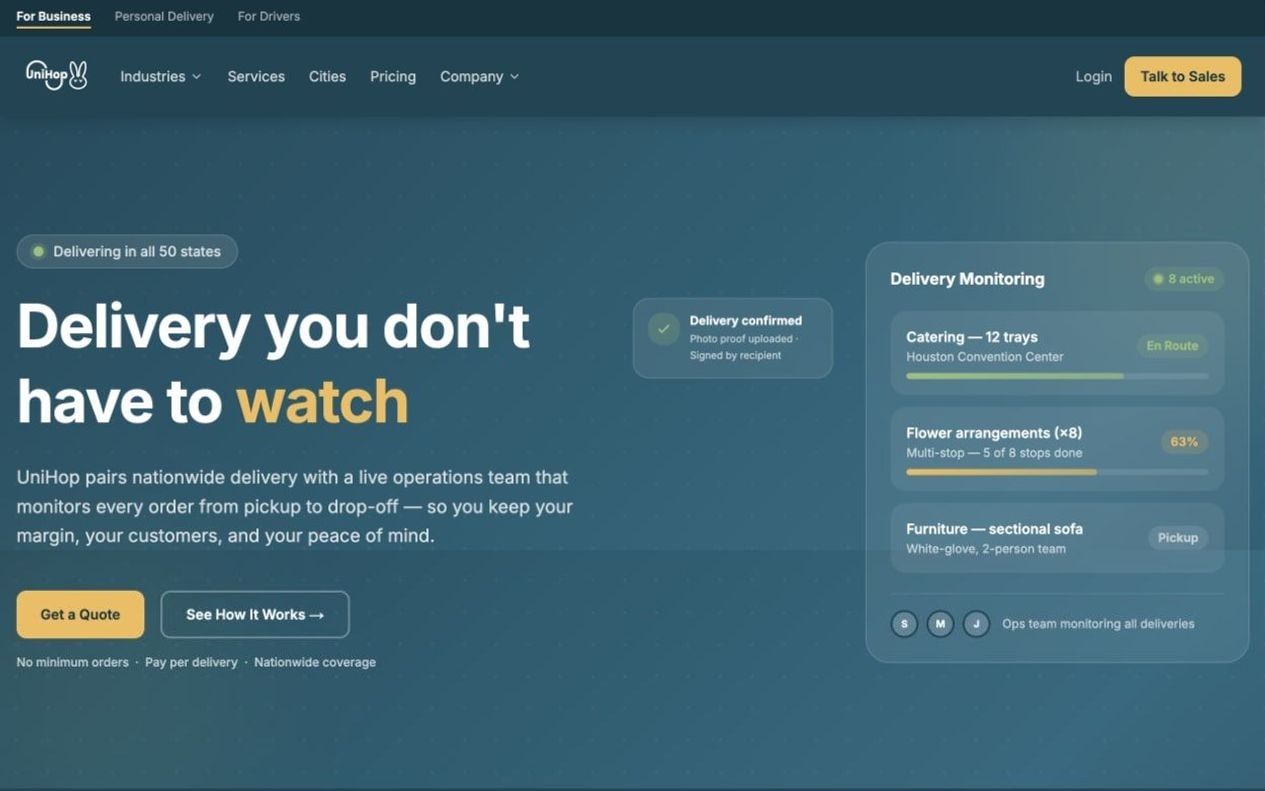
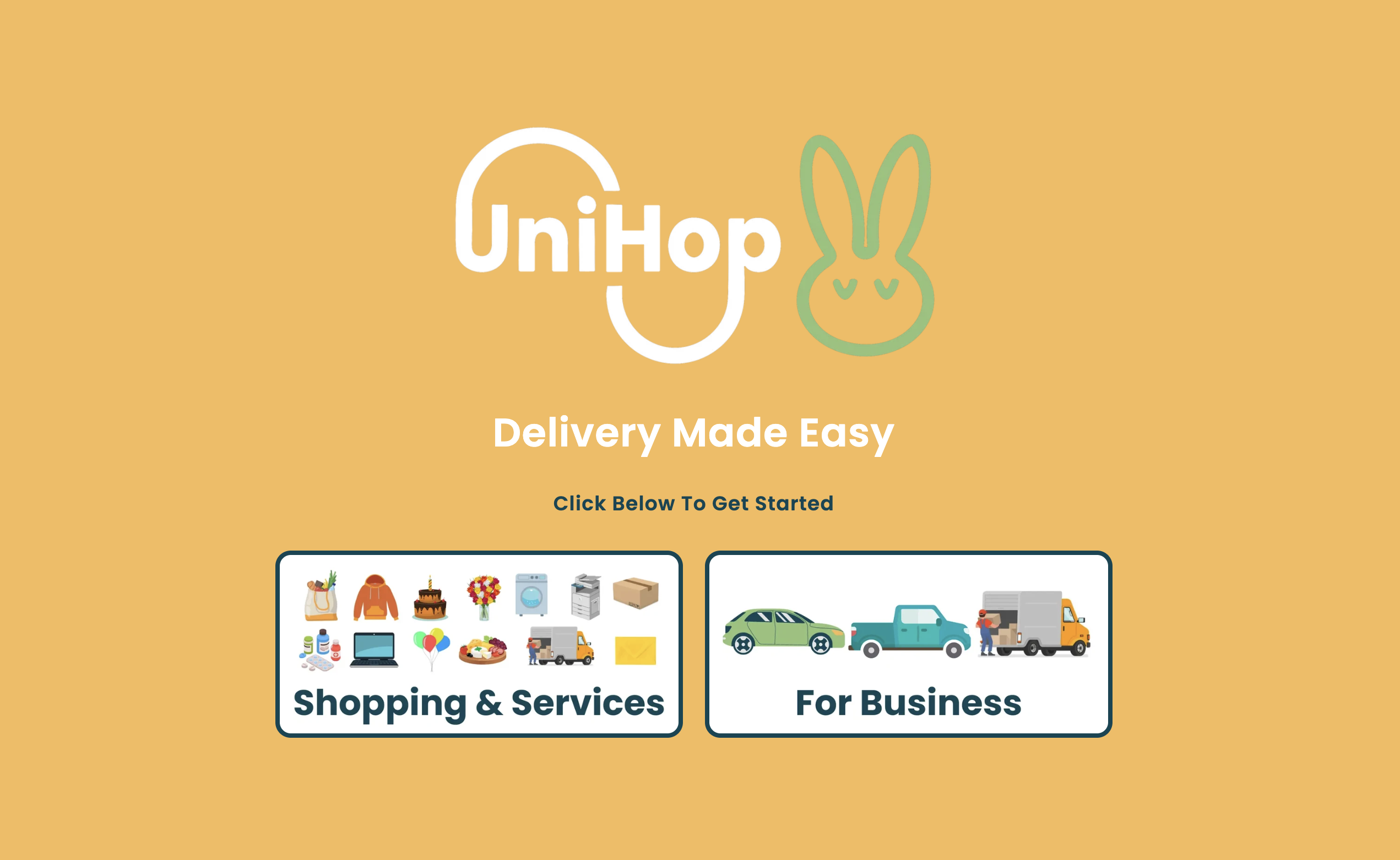
The homepage comparison shows the original entry page and the new business homepage. We replaced the logo-and-links introduction with a clear explanation of the delivery service, who it serves, and how to request a quote.
The old city and industry pages were one page repeated a thousand times with the name changed. We replaced every one of them with a page that has its own content and its own images, written for that city or that industry, so each can earn its own place in search. Then we built the shopper side: more than 800 store pages under the Personal Delivery tab, in the orange and yellow that tell you at a glance which half of the business you're in.
There is no CMS to learn. When the team needs a new city, industry, or store, they ask an assistant we built, and it writes the page in the same format and structure as the rest.
A clearer path for shoppers, too
The personal-delivery page below replaces the former shopping homepage. It keeps the orange and yellow of that side of the business while giving shoppers a cleaner starting point. It is a separate part of the redesign from the business homepage shown above.

What changed
The new structure supports distinct local and industry content, with assistants to help the team add pages consistently. Search performance will need to be evaluated separately; this case study documents the design and publishing changes.
